


Historians say the city of Kilwa is estimated to have been established in 800 AD. There is an oral memory that says: The first people who built Kilwa Island are the Cut, then the Jasi people of the Ranga tribe. Next came Mrimba and his people. Then came Sultan Ali bin Selimani the Shishazi, a Persian. He brought his cloak and brought the goods with his children. One child was named Fatima daughter of Sultan Ali.
From the 11th century Kilwa was an important trading center.
From the 13th and 14th centuries Kilwa became more important than Mombasa. His trade was gold from the Spanish Empire (ivory), ivory, iron, coconut as well as buying goods from mainland India and China. Gold coin from Kilwa has been found in Central Zimbabwe.
From the 11th century Kilwa was an important trading center.
From the 13th and 14th centuries Kilwa became more important than Mombasa. His trade was gold from the Spanish Empire (ivory), ivory, iron, coconut as well as buying goods from mainland India and China. Gold coin from Kilwa has been found in Central Zimbabwe.

in the 14th century - between 1330 and 1340 AD - the city was visited by the Arab traveler Ibn Battuta who left the first written statement about the city. a large building was erected if their ruins remain to this day such as the main mosque, the palace of the Great Wall and many others.

The advent of the Portuguese in the 16th Century disrupted the trade of the Natives. Kilwa turned back. During the 18th and 19th centuries it regained its economic power from the slave trade. The end of this business ended Kilwa's wealth
The buildings below are a total of ninety-nine mosques built in Kilwa kisiwan in one area.

Kilwa Kisiwani is the name of a large village on Kilwa Island near the town of Kilwa Marketing in Lindi Province, Tanzania. It was the site of the historic Kilwa city that was the largest of the Native towns on the East African coast during the 12-15 years. Thus, Kilwa was the capital of eastern Africa before the Europeans reached the Indian Ocean.

According to Kilwa Draft, which is one of the oldest texts that gives a brief history of this part of Tanzania, Kilwa is a city founded and stopped by migrants from Shiraz, Iran today. It is clear that these texts in which the author's name has been lost are a kind of narrative to stimulate the reader's imagination.
history is a good teacher, on the island of Kilwa there was a time when it was a sovereign state with a reputation for wealth, and it grew up using its own currency and that was the first currency to be used in east Africa.
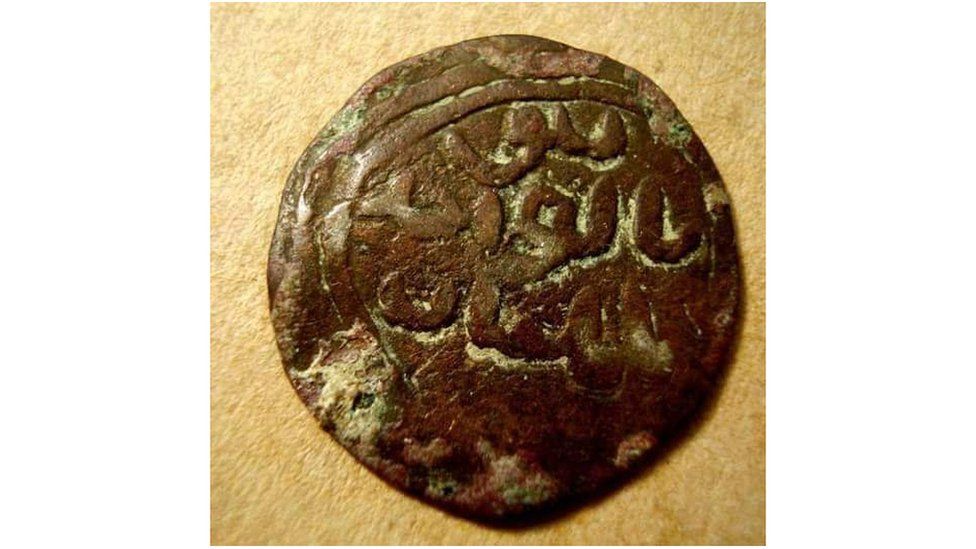

thus, although they contain some very interesting content from their very important testimonies, these manuscripts do not read as a scientific essay that would be written based on a rigid theory. Given the origin of the first settlers who arrived in Kilwa, we are not sure that they were from Persia, as claimed by this charter. Then let's be very careful.
According to these documents, it is said that a Sultan named Hassan bin Ali from Shirazi was the one who left the country during the outbreak of the conflict among his people. The sultan decided to leave with his six children. Departing from the port of Siraf, they sailed for seven ships to east Africa. It is believed that as each pass through the harbor of the coastline, one broke his journey as he decided to lay the foundations of his city.
According to these documents, it is said that a Sultan named Hassan bin Ali from Shirazi was the one who left the country during the outbreak of the conflict among his people. The sultan decided to leave with his six children. Departing from the port of Siraf, they sailed for seven ships to east Africa. It is believed that as each pass through the harbor of the coastline, one broke his journey as he decided to lay the foundations of his city.
It is the origin of the seven cities we have to this day in the coastal region of east Africa: Mandakha, Shaughu, Yanba, Mombasa, Pemba, Kilwa and Hanzuân. The sultan himself was the last remaining person of the expedition, and he settled on the island of Hanzuani which is in Uzzija. These events and events occurred in the years 957 to 985 after K. It is believed that Kilwa was then an island inhabited by nomadic people.
that was the largest kilwa prison that was used to house prisoners

Since they did not have much power, they agreed to sell their island by agreeing to the pieces. It was then that Ali bin Hussein took over the island for a stay including building fortresses against people on the mainland and other coastal cities.
Between 957 to 1131, Kilwa once fought in a neighboring town called, Shagh. The violence escalated, turning into a battle to control a vast empire. Kilwa became famous in all parts of eastern Africa due to its power and wealth that came from the African continent, the so-called Sofala.
Sofala Gold, which was some of the most widely available minerals of the time, went to be taken to Kilwa by foot. These expeditions were a major challenge in enriching the Kilwa empire.
Between 957 to 1131, Kilwa once fought in a neighboring town called, Shagh. The violence escalated, turning into a battle to control a vast empire. Kilwa became famous in all parts of eastern Africa due to its power and wealth that came from the African continent, the so-called Sofala.
Sofala Gold, which was some of the most widely available minerals of the time, went to be taken to Kilwa by foot. These expeditions were a major challenge in enriching the Kilwa empire.

In short, historians have agreed to say that Kilwa's peak in prestige dates from the 12th century to the 15th century. Kilwa became more important than Mombasa. His trade was gold from the US dollar (Zimbabwe), ivory, iron, coconut as well as buying goods from mainland India and China. Gold coin from Kilwa has been found in Central Zimbabwe.
The era was to further the rule of Kilwa which extended to the Mafia, Zanzibar and Pemba. Sultan Suleiman bin al-Hassan (1170-1189) once renovated the main buildings of Kilwa island. He is best known for the construction he started under his administration, called the Little Husin
The era was to further the rule of Kilwa which extended to the Mafia, Zanzibar and Pemba. Sultan Suleiman bin al-Hassan (1170-1189) once renovated the main buildings of Kilwa island. He is best known for the construction he started under his administration, called the Little Husin

This dynasty still existed under the Dynastie dynastie until 1277, which is the period of another phase that took place in the Herald dynasty that came from Hadramau, Yemen. The 14th and early 15th centuries were the most prestigious because of the enjoyment and consolidation of the past when Sultan Al Hassan bin Suleiman II (1331-1332) was given the opportunity to extend his Friday prayer including building. the palace known as the Great Hall.

This Is The Kilwa Map


No comments:
Post a Comment